
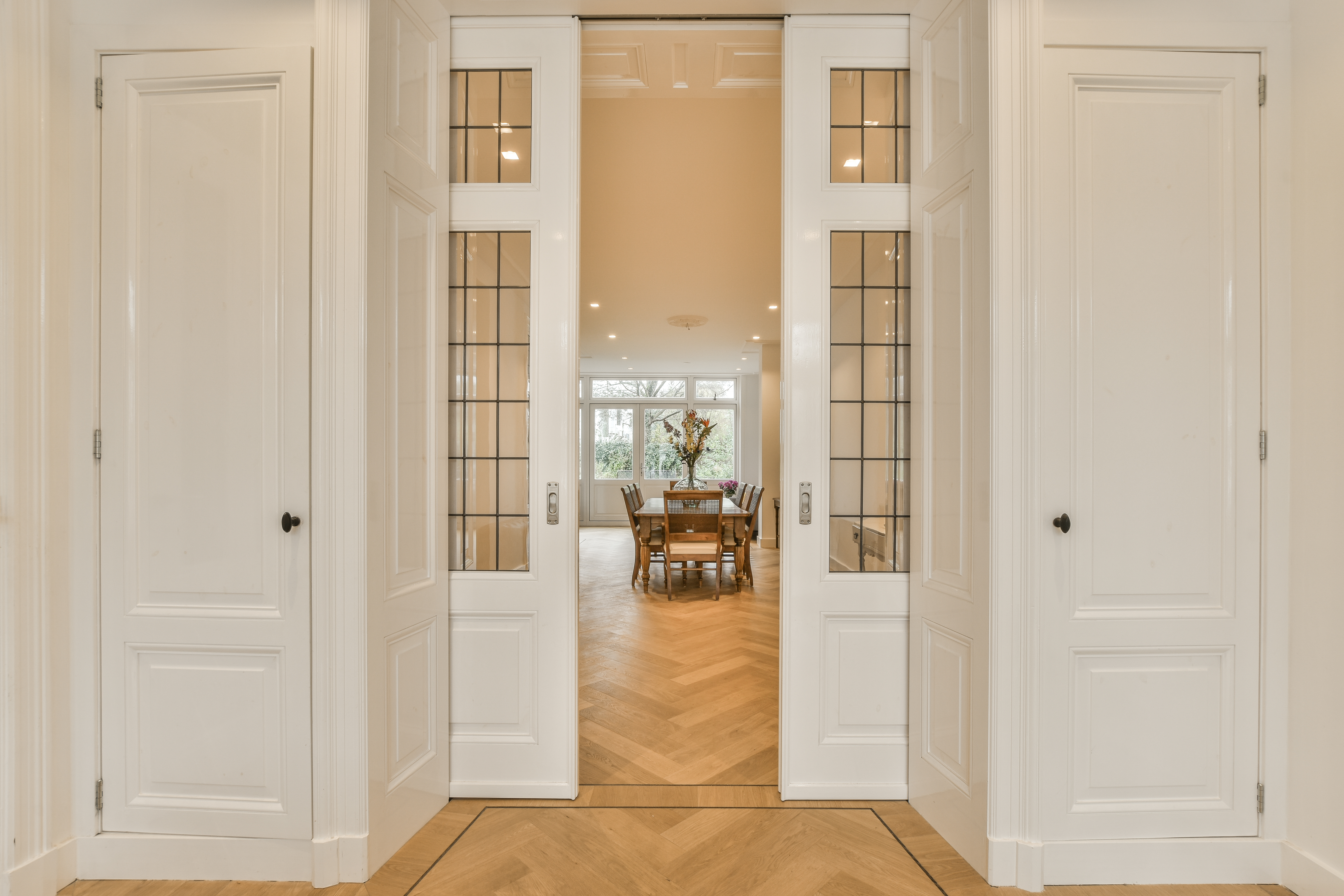
Pocket door systems operate within a constrained structural environment, where material selection directly influences performance, stability and long-term reliability. The system is largely concealed once installed, which means its success is determined less by what is visible and more by how each component performs within the wall construction.

For architects and specifiers, this places material specification at the centre of the design process. High-quality pocket doors are not defined by a single element, but by how the full system is engineered, integrated and coordinated.
Understanding the System as a Whole
A pocket door system is made up of several interdependent components: the frame, track, running gear and door leaf. Each plays a distinct role, and the materials used in each element affect how the system performs over time.
The system itself forms the structural pocket which is hidden within the wall. Its rigidity is critical, as any movement or deflection can affect alignment and lead to operational issues. Steel and aluminium are commonly used for this reason, as they provide the strength required to maintain consistent tolerances within the wall structure.
The track and running gear govern how the door moves. Here, material choice affects not only durability but also the quality of operation. Our proprietary precision-engineered steel running gear allows for smoother travel and reduced wear, particularly in environments where doors are used frequently.
The door leaf introduces a different set of considerations. Timber, composite and other materials influence weight, acoustic performance and finish quality. The interaction between the door leaf and the running system must be carefully managed, as increased weight places additional demands on the track and carriage components.
Taken together, these elements form a system where material selection cannot be considered in isolation. Performance is determined by how each part works in coordination with the others.
Why Material Selection Affects Performance
Material choice has a direct impact on how a pocket door performs during both installation and everyday use. Small variations in strength, rigidity or wear resistance can become more significant over time, particularly in high-traffic or commercial environments.
Structural stability is one of the primary considerations. A frame that lacks sufficient rigidity may allow movement within the wall, affecting alignment and leading to inconsistent operation.
Smooth operation is another key factor. The quality of the track and running gear materials determines how consistently the door moves, as well as how it performs under repeated use. Higher-quality materials help maintain alignment and reduce friction, supporting quieter and more controlled operation. Our proprietary running gear has been tested to 250,000 cycles without failure.
Resistance to wear also plays a role in long-term performance. Components that are subject to repeated movement must be able to withstand ongoing use without degradation. In lower-grade systems, wear can lead to increased friction, noise or failure of moving parts.
For specifiers, these factors are not separate considerations. They are interconnected outcomes of material selection and system design.
Materiality and User Experience
While much of the system is concealed, material choice still influences the user experience in tangible ways. A well-balanced system will move smoothly and consistently, without resistance or instability.
The finish quality of the door leaf also contributes to how the system integrates within the wider interior. In design-led environments, particularly where space is limited, the door often forms part of a continuous wall surface. Material consistency, surface finish and detailing all contribute to the overall perception of quality.
In compact or high-value interiors, pocket doors are often used to improve spatial efficiency. By removing the need for door swing, they allow for more flexible layouts and improved circulation. However, this benefit is only realised when the system operates reliably and integrates cleanly with surrounding elements.
Material selection, therefore, supports both performance and design intent. It enables the system to function as intended while contributing to the overall spatial quality of the project.
Distinguishing Between Commodity and Engineered Systems
Not all pocket door systems are engineered to the same standard. In commodity systems, material selection is often driven by cost, which can affect structural integrity, durability and long-term performance.
In contrast, high-quality pocket doors system is designed with material performance in mind from the outset. This includes selecting materials that maintain alignment, support consistent operation and withstand repeated use over time.
For architects and specifiers, the distinction is not always visible at first glance. Much of the difference lies within the concealed elements of the system.
Understanding the role of materials allows specifiers to make more informed decisions, particularly in projects where performance, reliability and finish quality are critical.
Considering Materials Early in the Design Process
Material specification is most effective when considered early in the design process. Decisions made at this stage influence not only the performance of the system but also how it integrates with wall construction, structural requirements and installation sequencing.
Early coordination allows for clearer alignment between design intent and technical delivery. It reduces the risk of compromises later in the project and supports a more consistent outcome on site.
In practice, this means considering the full system rather than focusing solely on the visible elements. It involves understanding how materials affect performance, how components interact, and how the system will be installed and used over time.
If you are working on a project where performance, detail and integration are critical, contact us to discuss your project requirements and ensure the system is aligned with both the design intent and technical requirements.

Image Source: Envato