
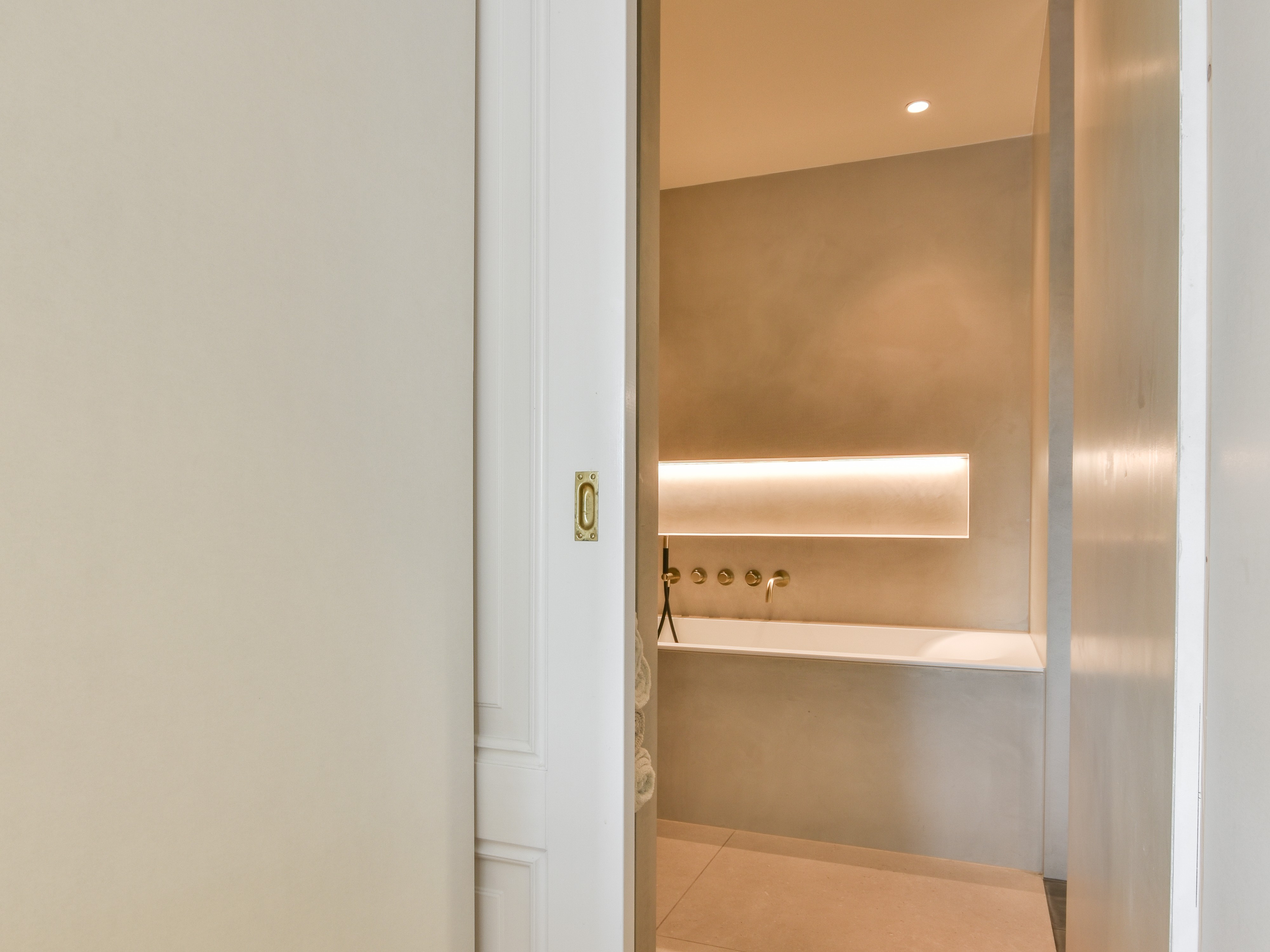
Bathroom layouts are often defined by space constraints. Door swing, clearance requirements and circulation all influence how effectively the space can be used. In smaller bathrooms and en-suites, these limitations can restrict layout options and reduce usable floor area.

Pocket doors offer an alternative approach. By sliding into the wall cavity, they remove the need for a swinging door and allow for more flexible use of space. However, whether pocket doors are a good choice for bathrooms depends on how the system is specified, installed and used within the environment.
How Pocket Doors Affect Bathroom Layout?
A traditional hinged door requires a clear arc to open. In compact bathrooms, this can limit the placement of sanitaryware, storage or fixtures. It can also affect how users move through the space, particularly where multiple elements are positioned close together.
Pocket bathroom doors remove this constraint. By eliminating the need for door clearance, they allow for more efficient layouts and improved circulation. This can be particularly useful in en-suites or smaller bathrooms where every part of the floor plan needs to be considered.
In practical terms, this may allow for:
- More flexible positioning of basins, toilets or showers
- Improved access within confined spaces
- Better use of wall and floor area
For homeowners considering whether pocket doors are good for bathrooms, this spatial benefit is often the primary reason for selecting a sliding system.
Privacy and Practical Use
Bathrooms require a higher level of privacy than most other spaces within a home. This makes door specification an important consideration.
Pocket doors for bathrooms can be fitted with appropriate locking mechanisms, allowing the space to be secured when in use. The choice of lock and handle should be considered alongside the door design to ensure both usability and consistency with the overall interior.
In everyday use, the system should operate smoothly and consistently. Any resistance or misalignment can affect usability, particularly in a space where ease of use is important.
Moisture and Durability
Bathrooms present a more demanding environment than many other areas of the home. Increased humidity, temperature variation and exposure to moisture all influence how materials perform over time.
When installing pocket bathroom doors, material selection becomes important. Door leaves and internal components should be suitable for use in humid conditions, with materials and finishes selected to perform reliably in these environments, reducing the risk of warping, swelling or degradation. For example, in particularly moist environments, a metal jamb system and fully glazed door may be specified to eliminate the chance of timber components warping due to excessive moisture levels.
Ventilation also plays a role. Adequate airflow within the bathroom helps manage moisture levels and supports the long-term performance of both the door and surrounding materials.
In well-specified, engineered systems, these factors can be managed effectively. However, where materials or installation methods are not suited to the environment, performance issues may develop over time.
Maintenance and Access
One consideration often raised when assessing whether pocket doors are good for bathrooms is access for maintenance.
Because the system sits within the wall, access to internal components is more limited than with a standard hinged door. For this reason, the quality of the system and its installation are particularly important.
A well-designed system should allow for reliable operation over time with minimal intervention. Where maintenance is required, access points and removable components can help reduce disruption.
For homeowners, this reinforces the importance of selecting a system that is designed for long-term performance rather than short-term convenience.
Installation Considerations
Installing a pocket door in a bathroom requires coordination between multiple elements of the build. Wall construction, plumbing, electrical work and finishing details all need to be aligned to accommodate the system.
Accurate setting out and correct installation are essential. Any deviation in alignment or tolerance can affect how the door operates, particularly in a space where precision is required for both function and finish.
Waterproofing and finishing details must also be considered carefully. The interface between the door system and the surrounding wall should be completed in a way that maintains both performance and visual consistency.
When Pocket Doors Are the Right Choice?
Pocket doors are well-suited to bathrooms where:
- Space is limited, and layout efficiency is important
- A clean, uncluttered design is required
- Improved circulation supports better use of the space
However, they require careful specification and installation to perform effectively in a bathroom environment. Material selection, system quality and coordination during the build all influence the final result.
For homeowners evaluating whether pocket doors are good for bathrooms, the decision is not simply about space saving. It is about ensuring the system is appropriate for the environment and capable of delivering reliable performance over time.
When these factors are considered early in the process, pocket bathroom doors can provide both functional and design benefits within the space.
If you are considering pocket doors for bathrooms and want to ensure they are suitable for your layout and environment, contact us to discuss your project requirements and explore the right system for your space.
Image Source: Envato